

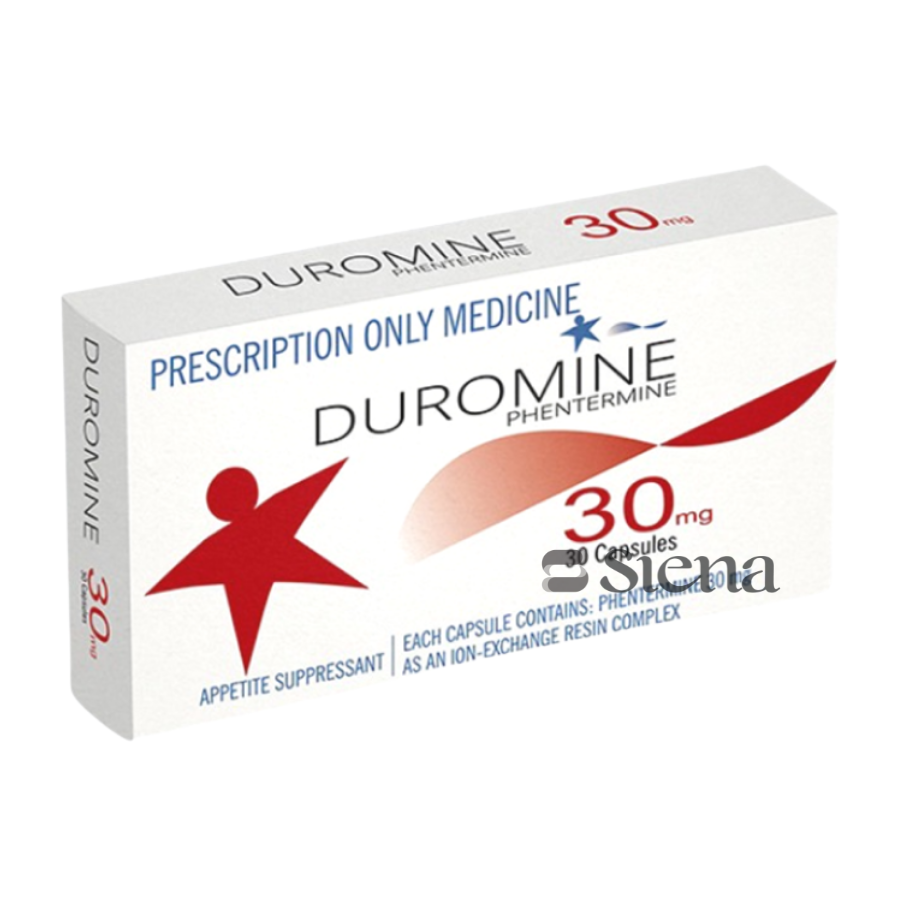
Duromine 30mg
$165.00
Duromine® contains phentermine, a prescription-only appetite suppressant for short-term weight management in adults with obesity. As a Schedule IV controlled substance with abuse potential, it is used as an adjunct to reduced-calorie diet and exercise under strict medical supervision for a limited duration.
Controlled Appetite Suppressant for Short-Term Weight Management
Duromine® is a brand-name formulation of phentermine, a sympathomimetic amine anorectic medication approved for short-term use in weight management. Marketed primarily in Australia, New Zealand, and certain other countries (but not FDA-approved under this brand name in the United States), Duromine® acts as a central nervous system stimulant to suppress appetite and support weight reduction efforts. As a Schedule IV controlled substance internationally classified, it carries significant potential for abuse, dependence, and serious cardiovascular side effects. Duromine® is indicated only for short-term adjunctive therapy—typically a few weeks—as part of a comprehensive weight management program that prioritizes lifestyle modification, including medically supervised reduced-calorie diet and increased physical activity.
Mechanism of Action with Significant Safety Considerations
The active ingredient in Duromine®, phentermine hydrochloride, stimulates the release of norepinephrine and dopamine in the hypothalamus, leading to appetite suppression and increased energy expenditure. This mechanism produces reduced hunger, decreased food cravings, and enhanced ability to adhere to caloric restriction during the initial, most challenging phase of weight management. However, due to rapid tolerance development and potential for psychological dependence and cardiovascular strain, treatment is strictly limited to short durations—usually not exceeding 12 weeks. Duromine® is typically prescribed as a morning dose to maximize daytime appetite control while minimizing insomnia. Important Note: While phentermine is FDA-approved in the United States, the specific brand Duromine® is not marketed in the U.S. Patients in countries where it is available must be carefully screened for contraindications, particularly cardiovascular conditions.
Key Features of Duromine® (Phentermine):
-
Short-Term Appetite Suppression: Provides pharmacological support to overcome initial hunger barriers during lifestyle modification.
-
Controlled Substance Status: Internationally classified as a Schedule IV controlled substance with abuse and dependence potential.
-
Strict Medical Supervision Required: Prescription-only medication requiring careful patient selection, monitoring, and limited duration of use.
-
Comprehensive Program Adjunct: Intended only as a temporary component of a broader weight management strategy emphasizing diet, exercise, and behavioral changes.
-
Regional Availability: Marketed in specific countries (e.g., Australia, New Zealand) but not under this brand name in the United States.
Clinical Protocol & Critical Safety Information:
-
Standard Dosage: Typically 15mg, 30mg, or 40mg once daily in the morning. Dose depends on individual response and tolerance.
-
Treatment Duration: Short-term use only (usually 3-12 weeks). Efficacy beyond 12 weeks is not established, and risk of dependence increases with prolonged use.
-
Absolute Contraindications:
-
Cardiovascular disease (coronary artery disease, arrhythmias, congestive heart failure, stroke, uncontrolled hypertension)
-
Hyperthyroidism
-
Glaucoma
-
Agitated states or history of psychosis
-
History of drug abuse or dependence
-
Pregnancy, lactation, or women planning pregnancy
-
Within 14 days of MAO inhibitor use
-
-
Common Side Effects: Dry mouth, insomnia, headache, dizziness, irritability, nervousness, tremors, constipation, increased heart rate and blood pressure.
-
Serious Risks: Primary pulmonary hypertension, valvular heart disease, dependence, psychiatric reactions (psychosis), seizures, cardiovascular events (stroke, myocardial infarction).
-
Monitoring Requirements: Regular blood pressure, heart rate, and cardiovascular symptom checks. Assessment for signs of dependence or abuse.
-
Drug Interactions: Contraindicated with MAO inhibitors. Use cautiously with other stimulants, antidepressants (SSRIs, SNRIs), and medications affecting blood pressure or heart rate.
Be the first to review “Duromine 30mg”
Related products

Weight loss & T2 Diabetes
Weight loss & T2 Diabetes
Weight loss & T2 Diabetes

Weight loss & T2 Diabetes

Weight loss & T2 Diabetes
Weight loss & T2 Diabetes

Weight loss & T2 Diabetes

Weight loss & T2 Diabetes
Reviews
There are no reviews yet.